English
 简体中文
简体中文
 粵語
粵語
 Arabic
 French
 Spanish
 Portuguese
 Deutsch
 Turkish
 Dutch
Dutch
 Italiano
 Russian
 Romaian
 Portuguese (Brazil)
 Greek
Greek

Broncos vs. Packers: 3 gamers in direction of view inside of 7 days 2 of NFL preseason
Sports |
2026-09-29 02:50:12
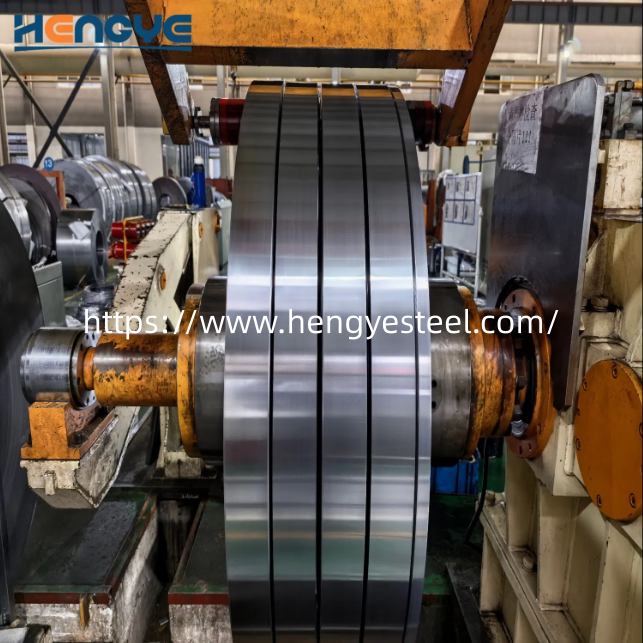
When manufacturers evaluate Precision Steel Sheet, the most useful approach is to consider how the material will behave from initial processing through final assembly rather than focusing only on its basic classification. A suitable steel material needs to work with the production method, support the requirements of the finished component, and maintain a consistent surface and structural condition during manufacturing. This makes material selection an important part of product development rather than simply a purchasing step.
The foundation of a precision steel product is its material composition. Different alloy systems can produce different combinations of hardness, toughness, formability, wear resistance, and surface characteristics. Cold-rolled steel is often selected when manufacturers require a controlled surface and consistent material condition for downstream processing. Heat-treated alloy steel can serve applications where the final component requires a different balance of mechanical characteristics. Dongyang Hengye Steel Strip Co., Ltd. specializes in precision cold-rolled and heat-treated alloy steel strips for industrial applications.
Surface condition deserves particular attention because it can influence both manufacturing and final appearance. A clean and consistent surface makes it easier for manufacturers to inspect incoming material and identify potential problems before production begins. For components that remain visible after assembly, surface quality may also contribute directly to the perceived quality of the finished product. Hengye describes its production approach as including material selection, pickling, cold rolling, annealing, leveling, and slitting, with process control used throughout production.
For buyers, selection should start with the finished application. A steel material intended for a formed mechanical component may have different requirements from one used in a cutting tool, bearing-related product, medical device, or automotive part. The processing route also matters. Buyers can provide information about forming, stamping, cutting, bending, heat treatment, surface expectations, and final use so that a manufacturer can better understand the intended application. Hengye states that it provides customized products according to customer requirements and application needs.
Manufacturing technology plays an important role in turning a suitable raw material into a dependable precision product. Cold rolling can influence surface condition and dimensional consistency, while annealing can help prepare material for subsequent processing. Leveling and slitting are also important because they affect how the material enters later manufacturing stages. When these processes are coordinated properly, downstream manufacturers can work with material that behaves more predictably during forming and assembly.
Quality control is closely connected with production technology. Precision components often require consistent material behavior because unexpected variation can affect forming, cutting, or assembly. A supplier with an integrated production and inspection process can provide greater continuity between material preparation and finished-product delivery. Hengye's official information highlights automated production, process monitoring, inspection equipment, and quality management as parts of its manufacturing approach.
From a user perspective, industrial material quality is experienced through the manufacturing process. Production teams may notice the difference when material feeds smoothly, responds predictably during forming, or maintains a stable surface throughout processing. Easy identification, appropriate packaging, and clear communication from the supplier can also make material management more convenient. These factors may not be visible in a finished component, but they can influence the efficiency of the production environment.
Storage and handling should also form part of the purchasing discussion. Steel materials can be affected by moisture, contamination, impact, and unsuitable handling during transportation or storage. Appropriate packaging can help protect the material before it reaches the production line. For overseas buyers, export-oriented packaging and communication are particularly useful because the product may pass through several logistics stages before processing begins. Hengye states that it provides export-standard packaging and supports international customers through its manufacturing and supply services.
Appearance becomes especially relevant when the steel is used in components that remain visible. Surface smoothness, visual uniformity, and the absence of obvious defects can influence the appearance of the finished product. At the same time, appearance should not be considered independently from function. A surface finish that looks attractive must also be compatible with the intended forming, cutting, coating, or assembly process.
For product developers, customization can provide another way to connect material selection with design requirements. Instead of adapting an existing material to an unsuitable manufacturing process, buyers can discuss the intended application with the supplier at an earlier stage. Dongyang Hengye Steel Strip Co., Ltd. supports customized production and serves industries including automotive components, engineering machinery, garden tools, medical devices, textile machinery, and other industrial applications.
For more information about Dongyang Hengye Steel Strip Co., Ltd., its precision steel products, processing capabilities, and customized manufacturing services, visit https://www.hengyesteel.com/.