English
 简体中文
简体中文
 粵語
粵語
 Arabic
 French
 Spanish
 Portuguese
 Deutsch
 Turkish
 Dutch
Dutch
 Italiano
 Russian
 Romaian
 Portuguese (Brazil)
 Greek
Greek

How to Choose Machined Components for Industrial Equipment
Other |
2026-09-28 02:31:23
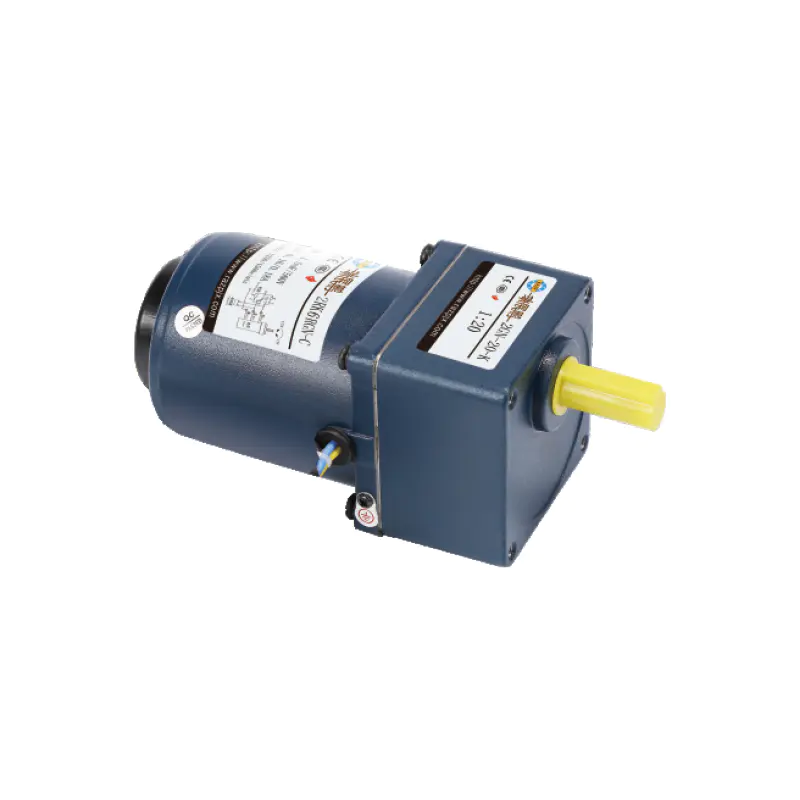
Output speed is an important factor when a gear motor is integrated into mechanical equipment because the rotational movement delivered through the output shaft directly affects how a machine performs its intended task. A Compact Size Gear Motor may occupy limited installation space, yet its operating characteristics still need to correspond with the requirements of the connected mechanism. For companies researching compact drive solutions, zpgearmotor provides information about small AC gear motors and related configurations that can be considered for industrial machinery and automated equipment. Since different machines require different movement patterns, how does output speed affect the practical performance of a compact gear motor?
The relationship between motor speed and output speed begins with the gearbox. An electric motor can rotate at a relatively high speed, while many mechanical systems require a slower and controlled output. The gearbox changes this rotational condition through its transmission arrangement, allowing the output shaft to operate at a speed suited to the connected equipment. The selected reduction ratio therefore becomes an important design consideration because it establishes a relationship between rotational speed and available torque.
When output speed is reduced through gearing, torque at the output shaft is generally increased within the limits of the motor and transmission system. This relationship is useful for machines that need controlled movement under a mechanical load. A conveyor, for example, may not require rapid shaft rotation, but it may need sufficient turning force to move materials at a steady pace. A packaging mechanism may have another requirement, where carefully timed movement is important for positioning, feeding, sealing, or transferring products.
Speed also affects the rhythm of a machine. If the output rotates too quickly for the connected mechanism, the equipment may move at an unsuitable pace, making synchronization difficult. If the output is too slow, the machine may not achieve the required operating cycle. For this reason, speed selection should be considered together with the mechanical structure, load characteristics, transmission ratio, operating schedule, and control method.
The load placed on the output shaft can also influence how a gear motor behaves. A motor operating with a light mechanical load may respond differently from one connected to a mechanism requiring substantial starting force. During acceleration, the system needs to provide sufficient torque to overcome resistance and bring the connected components into motion. Once the mechanism is running, the torque and speed relationship continues to affect the stability of operation.
Gear ratio is therefore not simply a method for reducing rotational speed. It is part of the overall mechanical design. Different ratios create different combinations of speed and torque, allowing a drive unit to be matched with particular machinery requirements. When engineers select a ratio, they may examine the required output rotation, load condition, shaft arrangement, available motor power, and operating environment rather than considering speed as an isolated specification.
The physical size of the gear motor can also become relevant when space is restricted. Compact machinery often has limited room around the drive assembly, so the motor and gearbox need to fit within the available structure without interfering with other components. A small housing can support flexible equipment design, but the internal gear arrangement still needs to provide the mechanical characteristics required by the application.
Output speed can also influence positioning accuracy in automated machinery. Certain mechanisms require controlled rotation to move a component into a defined position, while others depend on continuous motion. When a motor is connected to a controller, speed can be managed through the electrical system, but the mechanical reduction ratio still establishes the fundamental relationship between motor rotation and output movement.
Conveyor equipment provides a useful example. The conveyor belt needs to move at a suitable pace for the materials being transported, while the drive system needs to handle resistance from the belt, rollers, products, and surrounding structure. A gear motor with an appropriate output condition can provide the rotational movement required by the drive roller. If the speed requirement changes, the selection of the gear ratio or motor configuration may also need to change.
Packaging machinery presents another application where speed selection matters. Feeding, cutting, folding, filling, sealing, and conveying operations often need coordinated movement. When several mechanisms operate within the same machine, the output speed of each drive unit can influence synchronization. A carefully selected drive configuration can therefore become part of the mechanical planning process rather than simply a component choice made after the machine has been designed.
Automation equipment can place similar demands on compact drive systems. Small actuators, positioning mechanisms, feeders, indexing devices, and handling structures may need controlled rotation within a restricted installation area. In these situations, engineers often consider output speed together with torque, mounting direction, shaft dimensions, duty requirements, electrical characteristics, and control compatibility.
Noise and vibration may also be affected by operating speed. As rotational movement changes, the interaction between gears, bearings, shafts, and housing components can produce different mechanical conditions. Proper component matching and assembly can help maintain suitable operation within the intended working range. Lubrication, gear accuracy, bearing condition, and structural rigidity are also relevant when evaluating the behavior of a gear motor during operation.
Temperature is another consideration. Mechanical friction and electrical losses can generate heat during operation, and working conditions can vary according to load, speed, running time, ambient temperature, and installation arrangement. A drive unit should therefore be evaluated according to the conditions in which it will actually operate rather than relying on a single specification viewed independently.
Selecting output speed also requires attention to starting and stopping behavior. Some machines repeatedly accelerate and decelerate, while others operate at a relatively steady pace. Repeated changes in movement can place different demands on the motor and gearbox compared with continuous rotation. The control system, load inertia, reduction ratio, and motor characteristics should be considered together when designing the drive arrangement.
For equipment manufacturers and purchasing teams, technical communication with a gear motor supplier can help clarify these requirements. Useful information may include the desired output speed, load condition, operating pattern, installation space, shaft direction, mounting arrangement, voltage, frequency, and environmental conditions. Providing these details allows the supplier to understand the intended application and identify a configuration that corresponds with the machine design.
Zhanpeng Machinery offers small AC gear motor solutions alongside other gear motor configurations, supporting applications where compact mechanical construction and controlled rotary movement are required. Its product information covers different drive structures and application possibilities, giving equipment designers a reference point when considering motor and gearbox combinations for their machines.
For buyers comparing compact gear motor suppliers, output speed should be treated as part of a complete performance requirement rather than as a standalone figure. The relationship between speed, torque, gear ratio, load, installation space, control method, and working environment can influence the suitability of a drive system. Companies exploring a Compact Size Gear Motor and the related product options from zpgearmotor can review the small AC gear motor information at https://www.zpgearmotor.com/ while matching the available configuration with their specific equipment requirements.